Accountancy onboarding: why intake quality matters before AI automation
Every practice already does the hard part of onboarding — the judgement — then loses the value by storing the inputs as scattered emails and half-remembered calls. The bet: fix your intake structure first and you will get more from onboarding AI in six months than the practice that buys an onboarding bot first.
18 June 2026
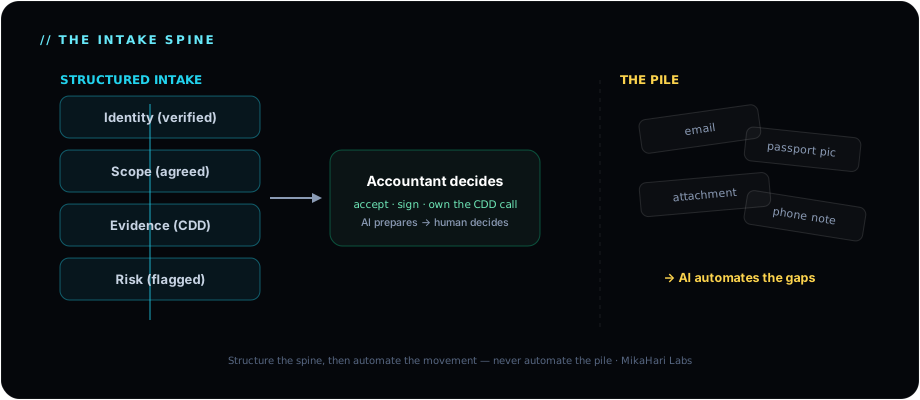
The first thing an accountancy practice should automate in onboarding is not the onboarding — it is the intake: the structured capture of who the client is, what they need, and the due-diligence evidence the firm is already legally required to gather and keep [2][3]. We call this the intake spine. AI drafts the engagement letter, triages the early queries and prepares advisory groundwork well — but only on clean, structured inputs; fed scattered ones, it confidently automates the gaps [5]. The work is high-volume and auditable, which is exactly why it is the safe place to start and exactly why ICAEW accountability and the AML due-diligence obligation both still expect a competent human to own the call [1][2][3].
Re-asking onboarding questions, re-collecting documents and re-formatting the same client numbers — re-collection, the most expensive line nobody costs, because intake was stored as a pile, not a structure. Onboarding paid for twice.
The client you onboarded twice
In March a small Leeds practice signs a new limited-company client. The manager runs the identity check, asks for last year's accounts, the bank feed, the VAT history and a list of directors, and gets most of it back across nine emails, two WhatsApp photos of a passport, and one phone call where the client mentions — in passing — that there is a second company nobody asked about. The engagement letter goes out. The work begins. Good onboarding. Then in September a different team member preparing the year-end advisory note cannot find the source-of-funds answer, re-asks for the bank statements the client already sent, and re-discovers the second company as if for the first time. Nothing was missed in March. It was just never structured — so the practice paid for the same onboarding twice.
That is what happens to every practice that does onboarding well and stores it badly. The fix has a name: the intake spine — the structured backbone of everything you learn about a client before you advise them, captured as named, dated, sourced fields rather than scattered across an inbox. And the trap is the exact moment people reach for AI: "automate the onboarding." This briefing argues they are reaching one step too early. Here is the bet it is willing to lose on — a practice that fixes its intake structure first will get more out of onboarding AI within six months than one that buys an onboarding bot first. If the structured firm does not pull ahead, the frame below is wrong. We do not think it is.
“Nothing was missed in March. It was just never structured — so the practice paid for the same onboarding twice.”
What this means: Onboarding done well but stored badly is onboarding you will pay for again.
So what is the intake spine, exactly?
Most practices treat intake as the boring bit you get through to reach the real work. That framing is the mistake. The intake spine is the structured backbone of everything you learn about a client before you advise them, captured as named, dated, sourced fields rather than scattered across an inbox. It has four vertebrae: identity (who they are, verified), scope (what they actually need, agreed in writing), evidence (the documents and source-of-funds facts that back the relationship), and risk (what about this client needs a closer look). Get those four standing upright and connected and you have a spine. Leave them as loose emails and attachments and you have a pile.
The distinction matters because of what sits on top. ICAEW guidance points to a new client receiving an engagement letter that sets out the agreed scope before any work begins, and to running client-acceptance checks at the start [1] — checks that in practice weigh up things like identity, the nature of the work, the firm's own competence and capacity, and any conflict. That is the spine being built by hand today. The thesis here is simple: AI is brilliant at putting that spine to work — drafting the letter, triaging the early queries, prepping the advisory note — and useless, or worse, at standing it up from a pile. Structure first, then automate. Automate a pile and you have automated a pile.
“Structure first, then automate. Automate a pile and you have automated a pile.”
What this means: The spine is four vertebrae — identity, scope, evidence, risk — captured as fields, not as an inbox.
The vertebra you can't skip: due diligence is law, not admin
One vertebra is not optional, and it is the one practices most often treat as paperwork. Customer due diligence is a legal obligation under the Money Laundering Regulations, supervised for accountants by ICAEW or HMRC depending on the firm [2][3]. The practice must verify the client's identity, understand the purpose and intended nature of the business relationship, identify beneficial owners, apply a risk-based approach, and keep the relationship under ongoing monitoring [2]. HMRC's own guidance for the sector is blunt about why the early questions matter: requesting supporting information helps you consider whether it is consistent with what you know about the purpose and nature of the relationship [3].
Read the Leeds story again with that in mind. The undisclosed second company is not a filing inconvenience — it is exactly the kind of inconsistency CDD exists to surface, and a pile-not-a-spine is how it stays buried until September. This is the part of onboarding the law already requires you to capture and keep, which makes it the highest-value vertebra to structure and the one where a clean, dated, sourced record is not a nice-to-have but the evidence you would put in front of a supervisor. Structure the obligation you already have, and you have built most of the spine for free.
Why now? The tools arrived; the order didn't
The intake-and-onboarding software market is real, named and maturing. Ignition sends proposals, engagement letters and payment terms and triggers onboarding when a client signs; Karbon chases outstanding client requests automatically and threads the team's tasks and emails around each client; Dext captures receipts and invoices, extracts the data and posts it; Glasscubes runs a client portal that collects documents and answers in a structured request rather than an email thread. A named UK practice makes it concrete: Hannah Barnes Accountancy Solutions cut the time it spends on engagement letters and AML compliance by managing them through BrightManager, the practice-management tool, per the vendor's published case study [8]. None of this is speculative. Practices are buying it now.
But notice what every one of those tools assumes: that you know what to ask, in what structure, with what evidence attached. The software automates the movement of the spine — the chasing, the routing, the drafting — superbly. It does not decide what the spine should be. That is the order most practices get backwards: they buy the tool that moves the structure before they have agreed the structure, and then automate the inconsistency. The window is open because the movement layer is genuinely good now. The trap is open for the same reason.
Where does AI help, and where must it stop?
On a clean intake spine, generative AI earns its place in three specific jobs. It drafts the engagement letter and the standard onboarding requests from the agreed scope. It triages the early client queries — sorting the "where do I send my receipts" from the "should I be a limited company", routing each to self-serve or to a person. And it prepares advisory groundwork — pulling the structured numbers into a first-draft note for the accountant to interrogate. ICAEW's own generative-AI guidance frames the boundary well: AI supports the work but the professional remains responsible and must be able to understand and explain the output [5]. Draft, triage, prepare. Not decide.
The line gets sharp where a decision becomes significant. Under UK data-protection law, where a decision is solely automated and has a legal or similarly significant effect on someone, a person has the right not to be subject to it and to obtain human intervention to contest it [6]. A practice will rarely make such a decision in routine onboarding, but the principle scopes the whole spine: AI prepares and proposes; a competent accountant accepts the client, signs the letter and owns the CDD risk call. Clients will trust a machine to assemble. They will not trust it to admit them — and they are right not to.
“Clients will trust a machine to assemble. They will not trust it to admit them — and they are right not to.”
What this means: AI drafts, triages and prepares; the accountant accepts the client and owns the risk call.
What does it cost to skip the spine?
Start with the scale. The UK and Ireland profession doing this work is large — the regulators' own figures put it at over 408,000 members across the professional bodies in 2024 [7]. That is the non-vendor anchor: a hard, audited count of who carries this drag, and MikaHari's read is that much of it falls on small and mid-sized practices still running onboarding by hand. On duration, the vendor literature offers a working figure: Karbon's published guide describes onboarding running for weeks when handled by hand, which structured intake tooling compresses materially [4]. Treat that as a vendor figure, not a regulated statistic; the point holds whatever the exact number, because the same weeks are spent either way. The cost that does not show up on any invoice is the re-collection: when intake is a pile, every fact already gathered in week one is liable to be re-asked, re-sent and re-keyed months later. That is onboarding paid for twice — and re-collection is the most expensive line nobody costs, because it never reaches a timesheet as its own activity.
Each practice that automates a pile inherits three problems at once. The onboarding bot drafts confidently from incomplete intake, so the gaps look filled when they are not. The CDD record stays scattered, so the supervisory evidence is a reconstruction job rather than a file — and HMRC's sector guidance is explicit that the early supporting information exists precisely to test consistency against what you know about the relationship, which a pile cannot do [3]. And the advisory prep inherits whatever the intake missed, so the partner is checking the machine's homework against a pile, which is slower than doing it cleanly the first time.
Structure first inverts all three. A named, dated, sourced spine means the AI drafts from complete inputs, the CDD evidence is a file not a hunt, and the advisory note starts from numbers the firm trusts. The unglamorous truth is that the highest-return AI move in an accountancy practice this year is not buying intelligence — it is agreeing what you capture, in what shape, with what evidence, before you let anything automate it. The spine is cheap to stand up and expensive to skip.
MikaHari's view: agree the spine before you automate it
So, plainly: do not start by automating onboarding. Start by structuring intake. Agree the four vertebrae — identity, scope, evidence, risk — as named, dated, sourced fields, with the CDD obligation you already carry as the load-bearing one [2][3]. Then, and only then, let the named tools move that spine: Ignition to issue the letter, Karbon or Glasscubes to collect and chase, AI to draft and triage and prep [4]. Keep the accountant accountable for acceptance, the signature and the risk call, because both your professional body and the law expect exactly that [1][5][6].
The frame is one line you can carry into a partners' meeting: structure the spine, then automate the movement — never automate the pile. Keep the adviser. Automate the drag. Evidence the relationship. The Leeds practice did the hard part in March; it just stored it as a pile and paid for it again in September. The intake was never the boring part of onboarding. It was the part holding everything else up.
What is the intake spine in accountancy onboarding?
It is the structured backbone of everything a practice learns about a client before advising them, captured as named, dated, sourced fields rather than scattered emails and attachments. It has four parts: identity (verified), scope (agreed in writing), evidence (documents and source-of-funds facts) and risk. AI works well on top of a spine and badly on top of a pile.
Is client due diligence a legal requirement for accountants?
Yes. Customer due diligence is required under the Money Laundering Regulations and supervised for accountants by ICAEW or HMRC. Firms must verify identity, understand the purpose and nature of the relationship, identify beneficial owners, apply a risk-based approach and carry out ongoing monitoring — and keep the evidence.
Should a practice automate onboarding with AI?
Only after structuring intake first. AI is strong at drafting engagement letters, triaging early queries and preparing advisory groundwork — but only on clean, structured inputs. Fed scattered ones it confidently automates the gaps. Agree what you capture, in what shape, with what evidence, then let tools like Ignition, Karbon or Glasscubes move that structure.
Can AI make the decision to accept a new client?
It should not be the sole decision-maker on client acceptance where AML risk, judgement or significant effects are involved. ICAEW expects the accountant to remain responsible and able to explain any AI output, and UK data-protection law gives a person the right to human intervention where a solely automated decision has a legal or similarly significant effect. AI prepares and proposes; a competent accountant accepts the client, signs the engagement letter and owns the CDD risk call.
What does poor onboarding intake actually cost a practice?
The hidden cost is re-collection — the most expensive line nobody costs. When intake is stored as a pile rather than a structure, facts already gathered in week one get re-asked, re-sent and re-keyed months later, so the firm pays for the same onboarding twice. It never shows on a timesheet as its own activity, which is why it goes unmanaged. The UK and Ireland profession numbers over 408,000 members, so the aggregate drag is large even though each instance hides.





- Where AI bites first in document-heavy workflows · MikaHari Labs briefing
- Why the price of a compliance evidence pack is collapsing · MikaHari Labs briefing
- Vendor questionnaires: answer once, reuse everywhere · MikaHari Labs briefing
- How to successfully engage new clients · ICAEW
- Anti-money laundering: client due diligence (CDD) · ICAEW
- Risks common to accountancy service providers · GOV.UK / HMRC
- Rights related to automated decision making including profiling · ICO
This briefing was researched and drafted by AI agents, then independently fact-checked before publishing. We show the workings so you can judge the quality yourself — not take our word for it.
- 1Researched + drafted · mikahari-briefing skill
- 2Humanised + GEO pass · editing agent
- 3Scored on soul + rigour · briefing-quality-scorer skill (independent)
- 4Fact-checked against sources · Codex, web-enabled (independent)
- 5Corrections applied · editing agent
Independently fact-checked: A web-enabled agent audited every cited statistic, named case and regulator claim against its source; flagged items were corrected before publishing. — Codex (independent), 18 June 2026.
Take this further.
If this briefing matches your workflow, start with the most specific move below — not a generic sales call.